- 01
Timber selection
Every board is chosen by hand from the finest European oak.
- 02
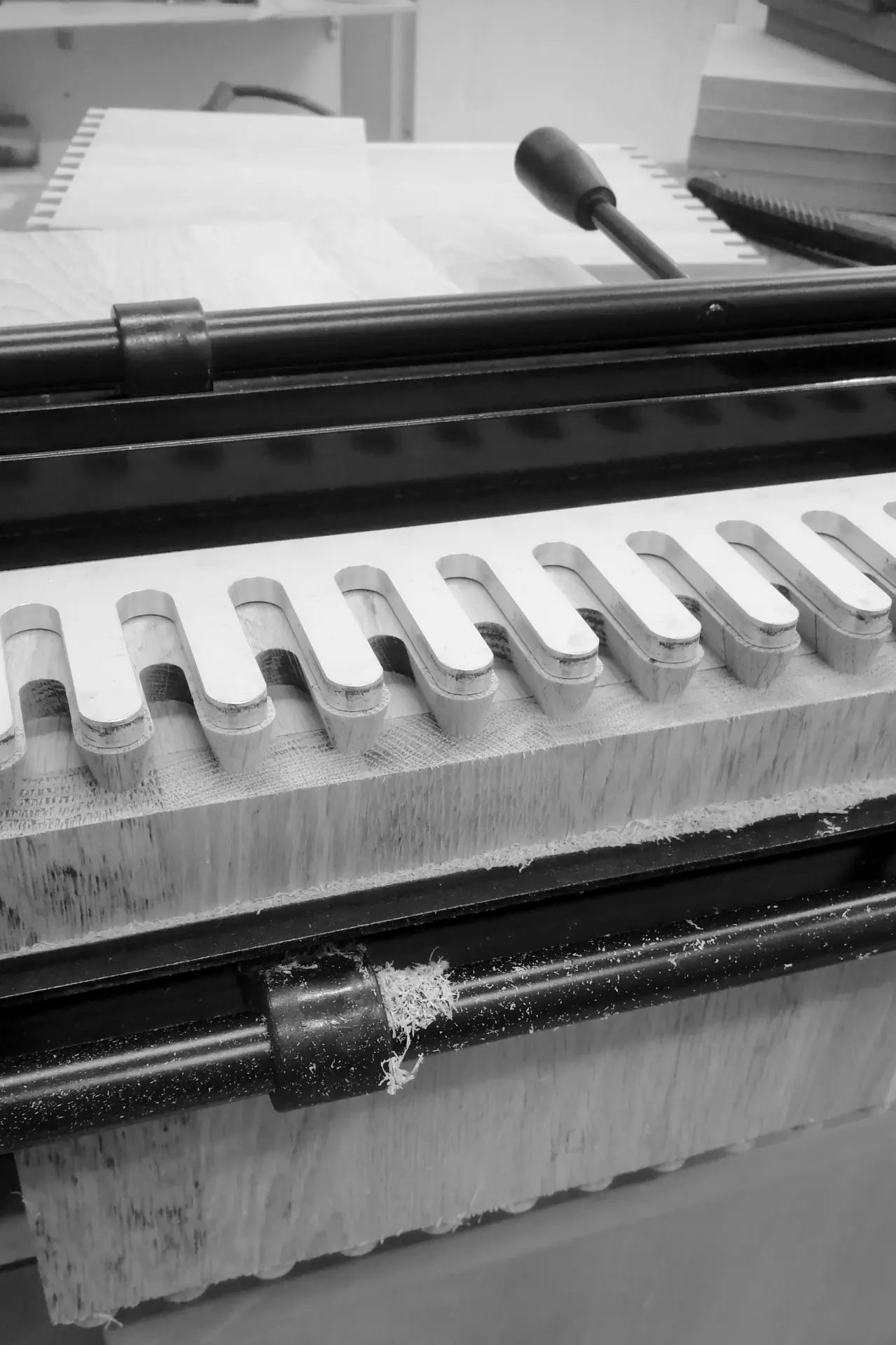
Cabinet joinery
Cabinet is made from european solid oak. Sides, top and bottom panels are joined with half-dovetails. The back and front baffles are jointed with rabbet joint. Nothing is glued to a shortcut; every joint is clamped for 24 hours.
- 03
Hand-oiled finish
Three coats of plant-derived oil are applied by hand. Between coats, the cabinet is sanded and polished into a 400-grit finish so the grain reveals rather than shines.
- 04
Crossover assembly
Every crossover is wired point-to-point — no printed circuit.
- 05
Driver treatment
Precision tweeters and low distortion midranges are hand-treated in-house, then measured and paired so both cabinets of a stereo pair track within perfect accuracy.
- 06
Signed & numbered
Before a pair leaves the workshop, it's photographed one last time, measured with care, and signed by the crafter.